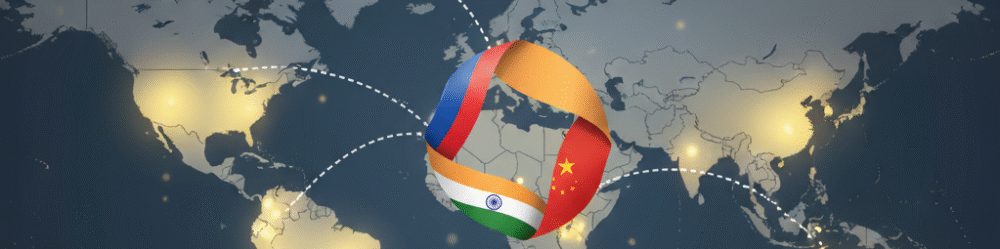
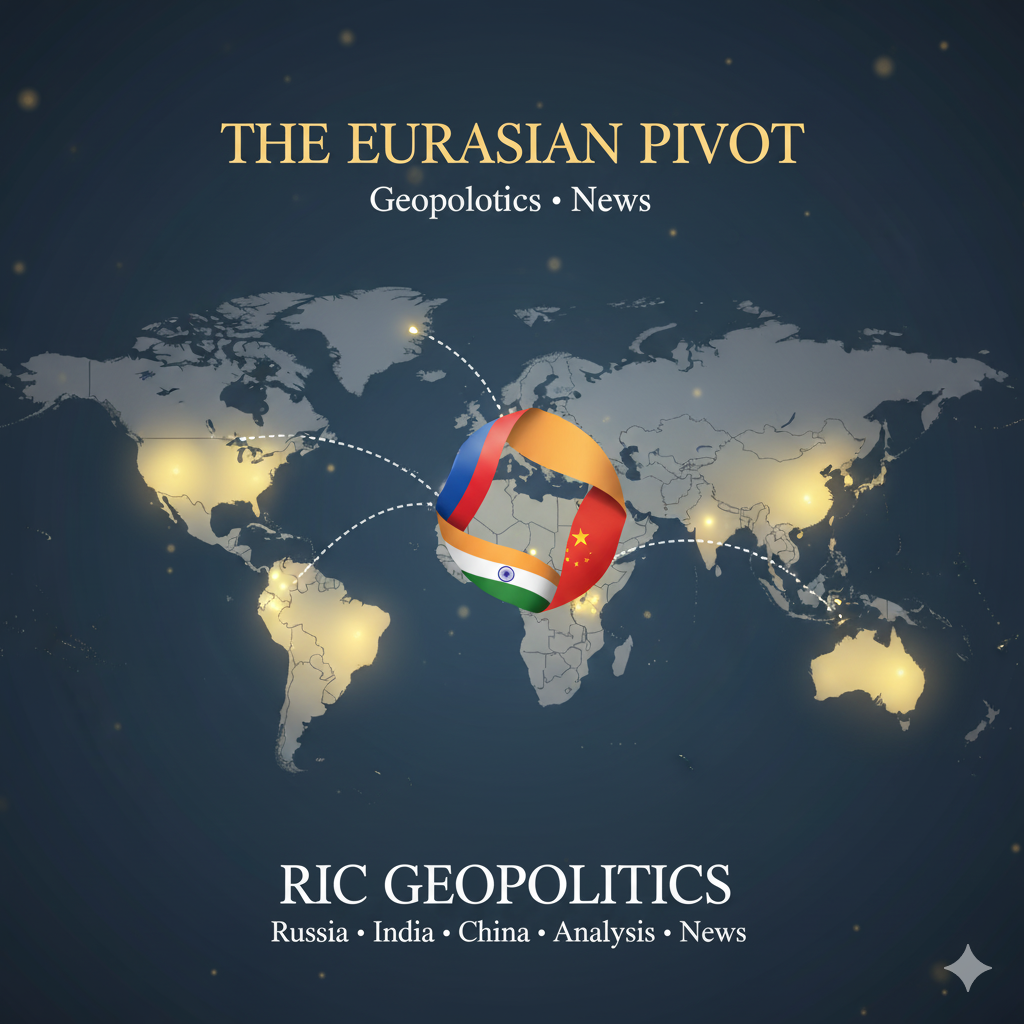
In the post-Cold War era, many security and economic blocs, such as BRICS, the Shanghai Cooperation and AISAN, were formed. None of them challenged the world order until the idea of Russia-India-China came into existence. It was just an idea, not a security arrangement, but it still managed to draw the attention of all major countries. RIC, even today, remains a mechanism for foreign ministers’ meetings between the three countries. It is not a formal group. Despite this, the West remains concerned with Russia, India and China coming together. Two of them are major economies, and one of them bluntly challenges the US hegemony and is a party in the ongoing war in Europe.
Just the thought of Russia, India and China coming together puts the US into a frenzy. Recent developments in China, when the RIC leaders were seen together, holding hands, were interpreted as a direct challenge to Trump and the US. If the US threatens to disturb the multipolar world, these three countries would come together to rescue.
The RIC bloc represents one democracy and two communist governments. All three are powerful leaders, and when their voices are heard. If RIC comes together, it creates a vertical column in the world map, dividing it into two halves — one representing the West under the US, the other representing the Global South and East. Economically, these countries are key partners in the global supply chain; they control the energy supply, and they have strong spheres of influence, extending from Central Asia to Africa. And the best part is, China and Russia are knocking at the doors of the US, in Latin America, Cuba, Mexico and Canada. The RIC group has the potential to turn the world upside down. Here are some of the outcomes they bring through close cooperation.
Shift towards a multipolar world
Breaks the US hegemony and Western dominance immediately as power is shared among multiple countries.
Energy and resource power
Both Russia and China are already controlling oil reserves, gas, and rare minerals. Imagine Europe without a Russian energy supply!
India, being a massive consumer, shifts the flow of funds. The Russia–Ukraine war is a prime example of it.
Economic clout
If RIC aligns economically, they are over 2.9 billion people, and growing at tremendous rates — especially India and China. Russia, despite being involved in a war against Ukraine (+ the West) is not slowing down. China is already challenging the technological might of the West. India is not only the biggest market but also making rapid advancements in technology, defence, and finance.
De-dollarization threat
De-dollarisation is the last thing the US would want at this moment. The global markets rely on the USD, and it indirectly depends on the US. BRICS, a group where Russia, India and China are founding members, are already working towards de-dollarisation. If the trade shifts to Chinese Yuan or national currencies, the US dominance in global trade will be over in no time.
Military and strategic weight
The military and strategic locations of these three countries, if aligned together, can bring the US to its knees. Russia is already a seasoned country when it comes to war. China has a very opaque defence system. No one really knows what it hides in the defence sector, from superior technology to biological warfare, the country can singlehandedly challenge the entire West.
India’s strategic geography and diverse defence and intelligence machinery complement the bloc. The country is focusing on economic advancements, despite this, it has one of the strongest armies in the world and is counted among the top five global firepowers. Most importantly, it controls the Indian Ocean and can expand both east and west.
The West has been lucky so far, as these countries have not created a NATO-like alliance. While Russia has consistently challenged the West through defence and war tactics, the Chinese have challenged the Western dominance in technology and defence. India, the fourth-largest economy, is the voice of the Global South.